Project Background
The shift toward long-distance electric vehicle travel in Germany accelerated sharply during 2022 and 2023, driven by a combination of federal EV purchase incentives, rising fuel prices, and expanded Autobahn charging regulations. AutoServ GmbH — a mid-size highway rest-stop operator running twelve fuel and service sites along the A9 corridor in Bavaria — recognised that their existing two-gun 50 kW DC chargers were creating queuing bottlenecks during peak summer and holiday periods.
With an average dwell time of eighteen to twenty-two minutes at their busiest locations and battery-electric vehicles already representing 9% of passenger vehicles during summer weekends, AutoServ’s management concluded that a higher-power charging infrastructure was not a future consideration — it was an immediate competitive requirement. Sites without adequate fast-charging capacity were losing vehicle stops to adjacent service areas that had already upgraded.
The challenge was selecting a charger manufacturer capable of meeting three non-negotiable criteria: CE certification with full IEC 61851 compliance documentation, OCPP 2.0 compatibility with their existing Electrip CMS platform, and a unit price and lead time that kept the capital project financially viable within the current regulatory subsidy framework.
Supplier Selection and Technical Specification
Following a structured RFQ process involving four manufacturers, AutoServ selected Klitv as the equipment supplier for the first phase of their charging infrastructure upgrade. The decision was based primarily on two factors: the availability of third-party IEC 61851 test reports at batch level (not merely self-declared CE conformity), and Klitv’s demonstrated ability to configure charger firmware for OCPP 2.0 with full smart-charging profile support.
The technical specification finalised for the A9 project consisted of:
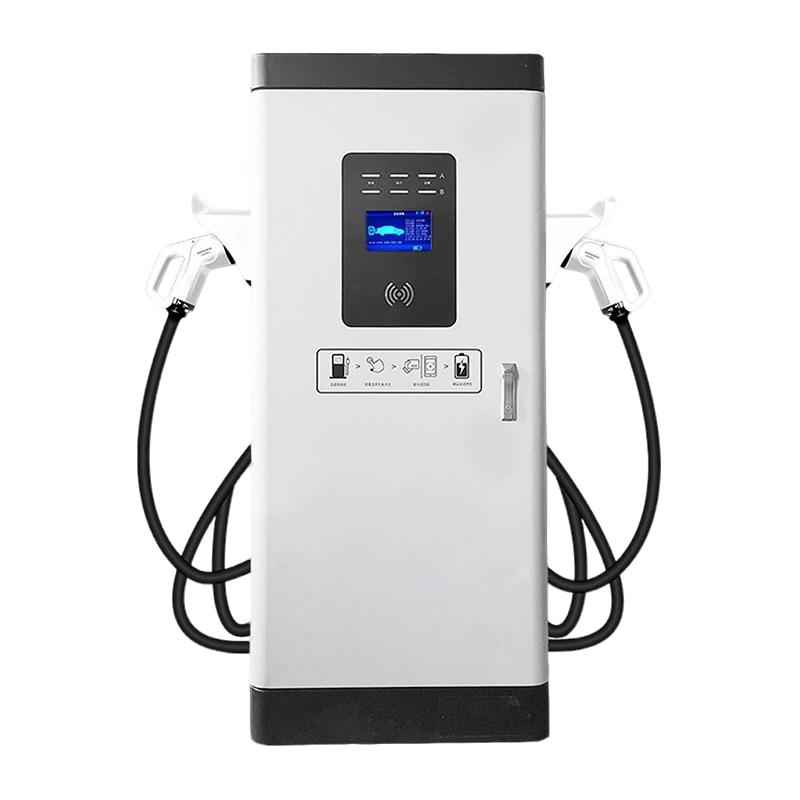
- 8 units of the 120–180 kW DC charging pile — deployed in pairs at each of two primary rest-stop locations, configured for simultaneous dual-gun output and OCPP 2.0 communication
- 2 units of the 60–80 kW DC charging pile — installed at a smaller auxiliary site to serve a mix of passenger cars and light commercial vehicles
- All units supplied with CCS2 primary connectors and CHAdeMO secondary connectors to maximise vehicle compatibility during the transition period
- IP65-rated enclosures to meet exposed outdoor installation requirements, with forced air cooling and ambient temperature tolerance of -25°C to +55°C
The OCPP 2.0 configuration required a bespoke firmware build. Klitv’s technical team completed the configuration and provided a test environment within the first two weeks of the project, allowing AutoServ’s CMS provider to complete integration testing in parallel with hardware production — compressing the timeline significantly.
Installation and Commissioning
Site preparation — grid connection upgrade, civil groundworks, and cable trenching — was handled by AutoServ’s appointed electrical contractor in Bavaria. Klitv provided dimensional drawings, foundation specifications, and cable entry requirements to support the civil design phase.
The ten-week project timeline broke down as follows:
| Phase | Duration |
|---|---|
| RFQ to purchase order | 2 weeks |
| Hardware production | 4 weeks |
| Shipping (FOB Qingdao to Hamburg) | 3 weeks |
| On-site installation and commissioning | 1 week |
Pre-shipment electrical testing records — covering hi-pot, insulation resistance, ground continuity, and full-load operational tests for each of the ten units — were provided prior to shipment, allowing AutoServ’s electrical inspector to review compliance before the equipment arrived on site.
Commissioning of the first four units at the primary Ingolstadt site was completed in a single working day. The units established OCPP 2.0 sessions with the Electrip CMS within two hours of power-on, and public-facing charging became available the following morning — within the contracted ten-week window.
Results: First Year of Operation
Over the twelve months following commissioning, AutoServ recorded the following outcomes:
Availability and Reliability The combined fleet of ten chargers achieved 98.4% uptime across Year 1, against a contractual SLA target of 96.5%. Two downtime events occurred — one caused by a grid supply interruption at the Ingolstadt site (not attributable to charger fault) and one requiring a firmware update to resolve a CMS timeout issue. The firmware update was deployed remotely by Klitv’s technical team over OCPP within four hours of the fault being reported.
Throughput and Revenue Peak weekly charging sessions across both primary sites reached 427. Average revenue per session was €18.40, giving a combined annual throughput of approximately €400,000 at the primary sites alone.
Capital Efficiency The projected payback period at the time of investment was 28 months. Actual throughput in Year 1 exceeded the forecast model by 16%, pulling the projected ROI milestone to 26 months. AutoServ confirmed this in a follow-up review and extended their framework agreement with Klitv for a second-phase expansion to four additional A9 sites.
Vehicle Compatibility CCS2 accounted for 88% of all sessions in Year 1; CHAdeMO accounted for 9%; 3% of sessions used the AC output of the 60–80 kW units. The dual-connector configuration was validated as the correct specification for the current German market mix.
Client Commentary
“The OCPP 2.0 integration was completed faster than we had experienced with European-made equipment on previous projects. What mattered most was the quality of the batch test documentation — it removed the uncertainty we normally face during commissioning audits. We have had essentially no hardware downtime in the first year, and the technical response when we needed the firmware update was faster than our German service contracts typically deliver.”
— Operations Director, AutoServ GmbH
Project Specification Summary
| Parameter | Detail |
|---|---|
| Country | Germany |
| Sites | 2 primary (Ingolstadt, Nuremberg North) + 1 auxiliary |
| Total Units | 10 (8× 120–180 kW DC + 2× 60–80 kW DC) |
| Connector Standards | CCS2 (primary) + CHAdeMO (secondary) |
| Protocol | OCPP 2.0 |
| IP Rating | IP65 |
| Installation Timeline | 10 weeks RFQ to commissioning |
| Year 1 Uptime | 98.4% |
| Peak Weekly Sessions | 427 |
| ROI Milestone | 26 months (vs. 28 projected) |
All performance data provided by the client based on their internal CMS reporting. Client and site names have been anonymised at the client’s request.