Project Background
BrightRoute Logistics is a Bangkok-based last-mile delivery operator servicing the Greater Bangkok Metropolitan Region — covering Bangkok, Nonthaburi, Pathum Thani, and Samut Prakan provinces. By mid-2023, the company operated a fleet of 200 light commercial vehicles (vans and motorcycle-based cargo units) servicing e-commerce fulfilment contracts with three major Thai retail platforms.
The company’s electrification programme was triggered by two convergent pressures. First, diesel and LPG fuel costs for the fleet had risen 27% over the 18 months to June 2023, directly compressing the per-delivery economics on fixed-price fulfilment contracts. Second, two of BrightRoute’s three major clients had introduced supply-chain sustainability requirements that included a measurable reduction in Scope 3 logistics emissions by 2025 — a requirement that diesel vehicles could not meet.
BrightRoute’s management committed to converting 80 of its 200 vehicles to BEV by the end of 2024, starting with 48 units in Phase 1 — all assigned to the Central Bangkok depot in Lat Krabang, near Suvarnabhumi Airport. The critical infrastructure question was whether 48 vehicles could be charged simultaneously on a depot electricity connection that was originally sized for lighting, forklift charging, and office use.
Technical Challenge: Depot Grid Capacity
The Lat Krabang depot had a 200A three-phase grid connection. A naive installation of 48× 7 kW chargers would draw a simultaneous peak load of 336 kW — nearly three times the available capacity — if all vehicles plugged in at shift change at 6:00 PM.
The solution was a combination of smart charging scheduling and dynamic load balancing:
- OCPP-compatible chargers configured to receive charging schedules from the fleet management system, staggering vehicle charge start times across the shift-change window
- Dynamic load balancing distributing the available 200A across active sessions in real time, ensuring no single charger group exceeded the site breaker rating
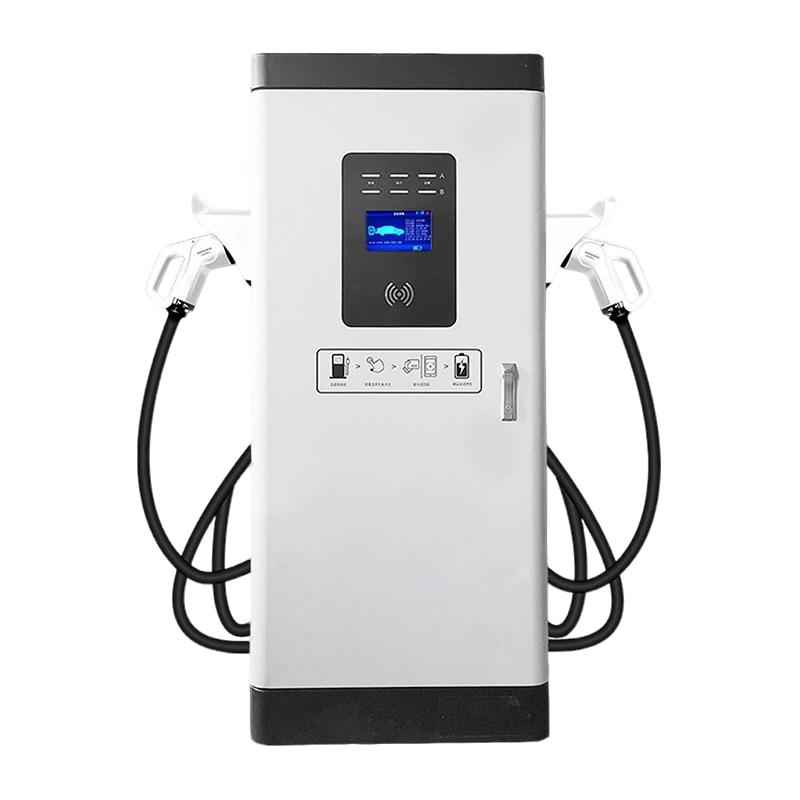
- 8× 20–40 kW DC fast chargers installed for priority vehicles requiring partial charge within a 45-minute turnaround window — typically the refrigerated vans serving perishable grocery deliveries
This architecture allowed all 48 BEV slots to be served by the existing grid connection without a costly capacity upgrade, which would have taken 4–6 months and approximately THB 2.8 million in network charge augmentation fees.
Equipment Specification
After evaluating three suppliers — including one domestic Thai distributor and one European brand — BrightRoute selected Klitv as the primary equipment supplier. The decision was primarily technical: Klitv’s 7 kW AC charging pile offered OCPP 1.6 with SetChargingProfile support (required for the load management architecture) and an RS485 communication port that could interface with BrightRoute’s existing Siemens depot monitoring panel.
The specification finalised for Phase 1:
- 48 units of 7 kW single-gun AC charging pile — floor-standing installation in three rows of sixteen; tethered Type 2 cables (GB/T 20234 adapters also supplied); OCPP 1.6; IP54; -20°C to 50°C ambient tolerance; 8-inch LCD touch screen for driver authentication via RFID
- 8 units of 20–40 kW DC charging pile — dedicated fast-charge bays for priority vehicles; CCS2 primary connector with GB/T 20234 adapter; OCPP 1.6; IP54; BMS communication for battery protection
- All units supplied with RS485 output for integration with the depot monitoring panel
- Firmware configured for fleet RFID authentication (drivers authenticated by employee card rather than payment credentials)
Procurement and Logistics
BrightRoute placed a confirmed purchase order in early October 2023. The logistics pathway was sea freight from Laem Chabang (Bangkok’s deep-sea port) via a direct service from Tianjin, eliminating a transhipment port and shaving five days from the original transit estimate.
The eight-week project timeline:
| Phase | Duration |
|---|---|
| Order confirmation to production start | 3 days |
| Hardware production | 4 weeks |
| Sea freight (Tianjin–Laem Chabang) | 2.5 weeks |
| Customs clearance and inland delivery | 3 days |
| Civil installation (conduit, mounting) | 5 days |
| OCPP configuration and commissioning | 3 days |
| Total | 8 weeks |
Pre-shipment test records for all 56 units were forwarded to BrightRoute’s electrical engineer two weeks before arrival, allowing the commissioning checklist to be pre-populated and the acceptance test completed in a single day.
Load Management Configuration
The load balancing implementation — the most technically complex element of the project — was configured jointly by Klitv’s technical team and BrightRoute’s fleet software provider. The key parameters:
- Maximum site load cap: 190 kW (giving a 5% headroom below the 200A breaker limit)
- Priority vehicle designation: 8 DC fast charger bays flagged as “Priority” — these hold their allocated power even if total site load approaches cap
- Charging schedule: OCPP SetChargingProfile messages pushed from the fleet management system at 17:30 each day, staggering charge start times across the shift-change window to avoid simultaneous connection peaks
- Dynamic reallocation: If fewer than the maximum number of vehicles connect at any time, the remaining available power is redistributed to connected vehicles proportionally, reducing per-vehicle charge time
The entire configuration was tested in a simulated load scenario before live deployment, using the Klitv test environment that had been provided during the OCPP integration phase.
Results: Eight Months of Operation
Uptime and Reliability The 56-unit fleet achieved 99.1% uptime over the first eight months of operation — 0.9% downtime attributable entirely to two planned maintenance windows for depot electrical system inspections, during which chargers were de-energised. Zero charger hardware faults were recorded in the first eight months.
Energy Cost Reduction BrightRoute tracked per-km energy cost for the 48 BEV vehicles against the diesel vehicles they replaced. The electricity cost per km (based on the MEA industrial tariff applying to the Lat Krabang depot) was 38% lower than the diesel equivalent per km on the same route mix. This represents an annualised saving of approximately THB 4.2 million across the 48-vehicle Phase 1 fleet.
Throughput The 56 chargers delivered a combined 1,440–1,500 charging sessions per week in steady state (approximately 26 sessions per charger per week for the AC units; 30–35 for the DC fast chargers). All 48 BEV vehicles completed their assigned daily routes without range disruption, validating the overnight charging model.
Phase 2 Commitment On the basis of Phase 1 outcomes, BrightRoute confirmed Phase 2 of their electrification programme in May 2024 — an additional 32× 7 kW AC chargers and 4× 60–80 kW DC chargers for a second depot in Nonthaburi, targeting a further 40 BEV conversions.
Client Commentary
“The load balancing was the part we were most nervous about — we had heard stories of fleet operators having to upgrade their grid connection at enormous cost and delay. The fact that the Klitv chargers support SetChargingProfile properly, with real-time dynamic reallocation, meant we could make the existing 200A connection work for 48 vehicles. That was the deciding factor in choosing both the supplier and the architecture.”
— Head of Fleet Operations, BrightRoute Logistics
Project Specification Summary
| Parameter | Detail |
|---|---|
| Country | Thailand (Bangkok Metropolitan Region) |
| Depot | Lat Krabang, Bangkok |
| Total Units | 56 (48× 7 kW AC + 8× 20–40 kW DC) |
| Connector Standards | Type 2 (AC); CCS2 + GB/T adapter (DC) |
| Protocol | OCPP 1.6 |
| Site Grid Connection | 200A three-phase (no upgrade required) |
| Installation Timeline | 8 weeks order to commissioning |
| Uptime (8 months) | 99.1% |
| Energy Cost Saving | 38% vs. diesel equivalent per km |
| Weekly Sessions | 1,440–1,500 |
Performance data provided by the client based on fleet management system and depot energy meter records. Client and site names have been anonymised at the client’s request.