Overview
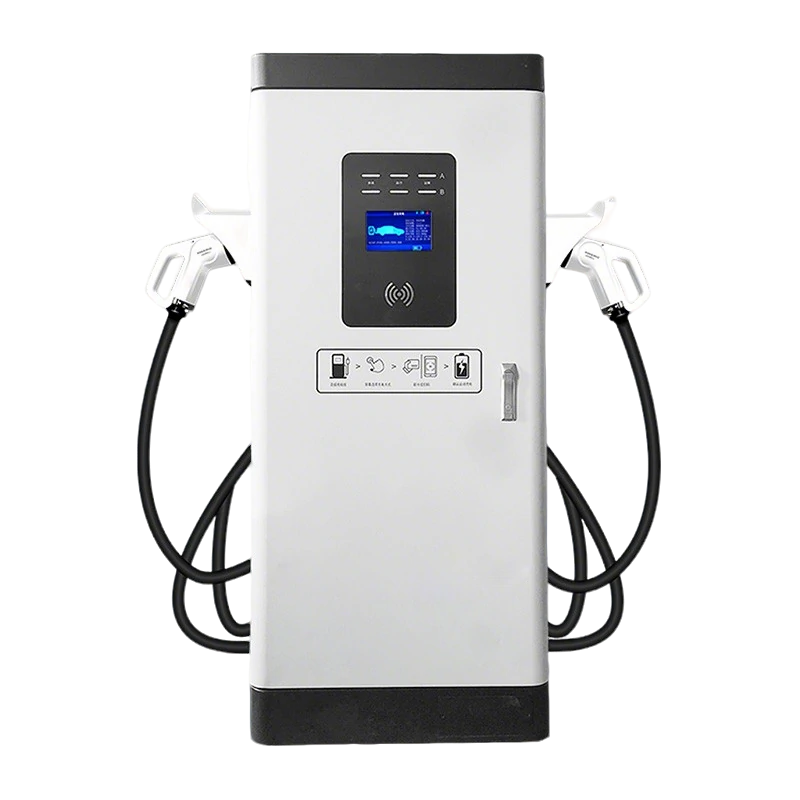
The Klitv 360–720 kW liquid-cooled supercharger represents the top of our product range and the current practical upper limit for terrestrial EV charging infrastructure outside of megawatt charging for heavy trucks. It is designed for operators building destination supercharging infrastructure — highway corridors, mega-hubs, and commercial centres — where maximum throughput and minimum vehicle dwell time are the primary operational requirements.
The product’s defining characteristic is liquid-cooled cable technology. At output powers above 200 kW, conventional air-cooled copper cables become impractically heavy and stiff for driver use. Liquid cooling circulates coolant through the charging cable and connector assembly, removing heat at the source and allowing significantly thinner cables despite the very high current — enabling drivers to handle the cable comfortably even at 720 kW.
Liquid Cooling Technology
Why Liquid Cooling is Necessary Above 200 kW
Current (in amperes) is the primary driver of cable heat generation: heat generation scales with the square of current (I²R). At 400 kW output into a 400V vehicle, the current is 1,000 amperes. At the same power into an 800V vehicle, it is 500 amperes — substantially less heat, but still far beyond what standard air-cooled cables can manage without becoming dangerously hot or prohibitively heavy.
Liquid cooling addresses this by:
- Running coolant through micro-channels integrated into the cable jacket
- Removing heat at a rate proportional to coolant flow, independent of ambient temperature
- Maintaining cable temperature within safe limits continuously rather than relying on intermittent cool-down periods
This allows the cable cross-section to be sized for electrical conductivity rather than thermal dissipation — resulting in a cable that is flexible, manageable, and safe for public use.
Dual-Gun Simultaneous Charging
The 360–720 kW unit supports two simultaneous charging sessions from a single cabinet. Total power is allocated between the two guns dynamically based on each vehicle’s charge acceptance rate:
- If Gun 1 is charging a 400V vehicle accepting 350 kW and Gun 2 is charging an 800V vehicle accepting 200 kW, the unit delivers each vehicle its requested power up to the 720 kW total
- If one gun is not in use, the full 720 kW is available to the single active vehicle
- If both vehicles request more than the total available power, the CMS or local controller allocates power proportionally or by configurable priority rules
Intelligent Power Distribution: Multi-Unit Deployments
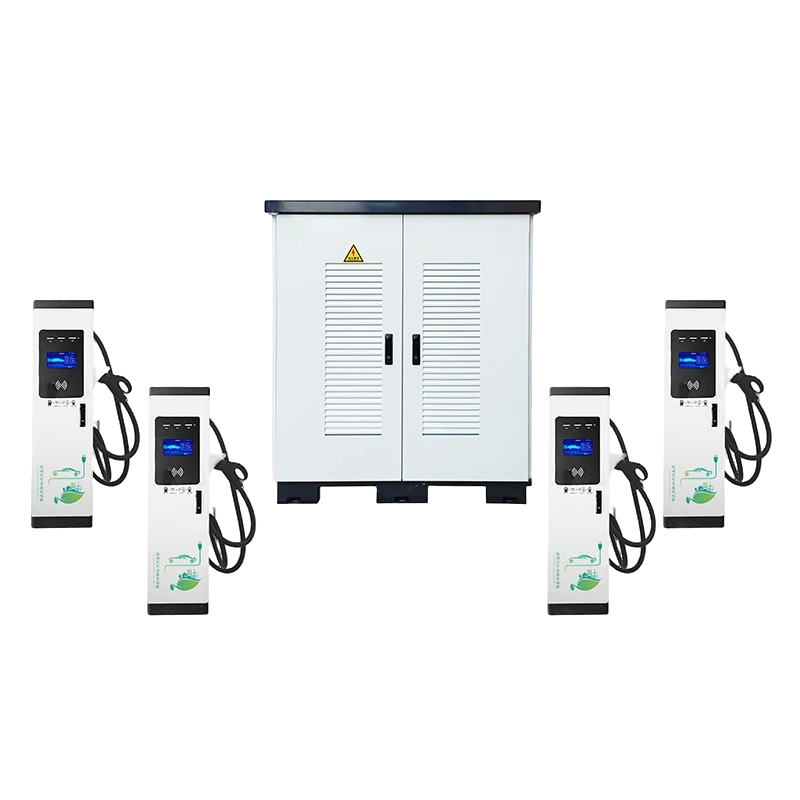
The most powerful feature of the 360–720 kW platform is its wireless current sharing architecture for multi-unit deployments. When multiple cabinets are installed in a charging hub:
- Wireless current sharing — cabinets communicate directly with each other (no hardwired bus required) to share information about their current output and available headroom
- Intelligent grouping — units are configured into logical groups; a group shares a common power budget, and individual units draw from this budget dynamically
- Automatic power distribution — if one unit’s vehicles charge below maximum rate (due to battery SOC or vehicle limits), the unused power is automatically redirected to other units with higher demand
- Smooth expansion — adding additional cabinets to an existing hub requires only network connection, no rewiring of the power distribution architecture
This means a 10-unit 720 kW hub operates as a single 7.2 MW intelligent power system rather than 10 independent 720 kW units — dramatically improving utilisation and throughput.
Highway Supercharging Hub Design
A typical highway supercharging hub using the 360–720 kW platform:
- 8–12 cabinets arranged in two rows, each serving two bays (dual-gun)
- 16–24 simultaneous charging sessions from 8–12 cabinets
- Total site power: up to 8.64 MW for a 12-cabinet configuration
- Grid connection: dedicated HV substation typically required above 4 MW
- Target session time: 10–20 minutes for 200–400 km range restoration
The wireless current sharing means the site effectively operates as a single large power pool rather than individual chargers, maximising the charging experience even when the site is partially occupied.
Specifications for Procurement
Dimensions and Weight
The 1500 × 1000 × 1952 mm cabinet requires careful site planning. Each cabinet needs approximately 2 metres of access clearance on the cable-facing side for driver use and maintenance access. Total installed weight (including coolant) requires a reinforced concrete pad — specifications provided in the installation manual.
Cooling System
The liquid cooling circuit requires a coolant reservoir, circulation pump, and heat exchanger external to the main cabinet (integrated into the installation design). Klitv provides a complete cooling system specification as part of the project engineering package.